
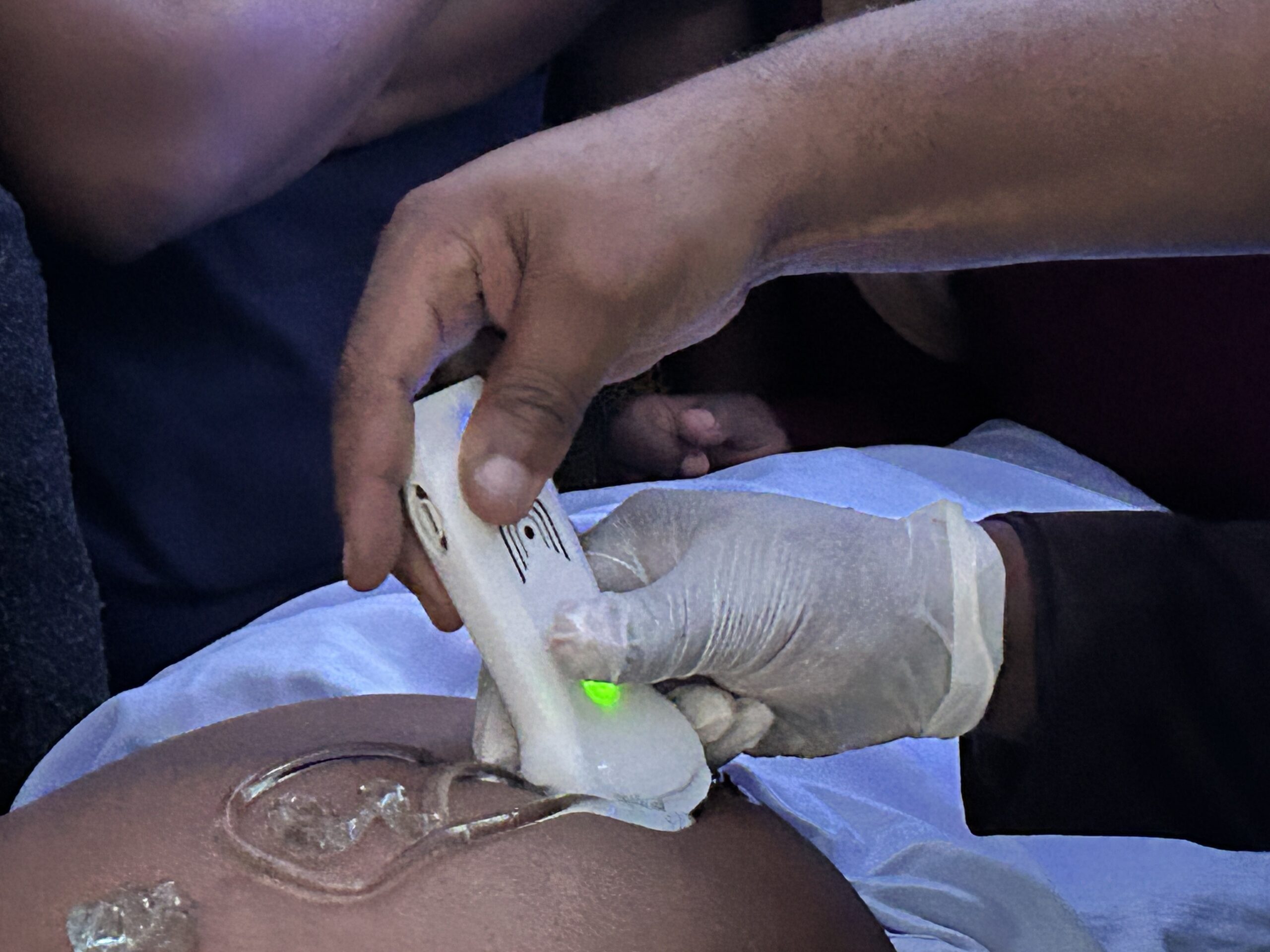
For decades, ultrasound lived in the radiology department of referral hospitals. Point-of-Care Ultrasound (POCUS) changes that: a portable probe, a trained clinician, and answers at the bedside in minutes. For clinics that are hours away from the nearest imaging centre, this is not a convenience — it is a lifeline.
Where POCUS makes the biggest difference
In obstetrics, POCUS helps detect placenta praevia, abnormal lie, and multiple pregnancy before labour begins — the complications that most often turn deadly far from a theatre. In emergency care, the FASH and eFAST protocols guide rapid decisions for trauma and suspected TB. In internal medicine, bedside echo and lung ultrasound shorten the road to a diagnosis when laboratory support is thin.
The skill is the machine
Handheld devices are now affordable for many facilities, but a probe without training produces confident errors. Good POCUS education combines physics and image acquisition, supervised scanning on real patients, and — critically — knowing the limits: which findings you can act on, and which need referral.
Building a POCUS programme that lasts
The facilities that succeed treat POCUS as a system, not a gadget: they define scope-of-practice protocols, log and review scans, and refresh skills regularly. Mentorship matters more than any single course; the goal is a local champion who keeps standards high after the trainers leave.
Learn POCUS with us
QualCare Africa runs CPD-accredited POCUS courses designed for African frontline practice, with hands-on scanning and post-course mentorship. Contact us to find out when the next cohort starts.